Saturday, March 28, 2026

The Religious Text

People who find themselves bound by religious scriptures often fail to understand why those scriptures were created in the first place. And that failure is precisely what turns them into fanatics.

To my understanding, those scriptures — regardless of which religion — are nothing more than books of law. A modern parlance would call them a Constitution. And similar to how and by whom constitutions are created, those religious scriptures were also created by people of similar intellect. We can fancy them by giving them names — Prophet, Sage, Son of God, Incarnation. But the point is, all those gentlemen saw through the problems of society at myriad scale and formulated rules so that a large section of the population could follow them. This was done to avoid chaos.

However good those scriptures were at the time they were written, they do not hold the same sheen with the test of time. There will certainly be a good portion of those scriptures which remain valid for as long as human life exists. But that does not make any of them infallible.

Most importantly, ideas mentioned in those scriptures must be challenged and rewritten as time goes by. Otherwise they will be nothing more than works of fiction.

A constitution, on the other hand, can be modified and changed if a majority of stakeholders believe so. That makes it a better scripture than any existing religious text. Constitutions are written in legal language — there is no storytelling about why a particular law is the way it is. It simply is, and it can be changed when it no longer serves.

As humans we have evolved exponentially, particularly in the last couple of centuries. The democratisation of knowledge — once purely dependent on individual exposure to the wider world — has fundamentally changed. These are the most progressive times in the history of civilisation to be alive in.

And yet, only one thing has not changed since the oldest scriptures to the modern constitution — human lust for greed, money and power. Hence anything that remotely addresses this lust will remain valid for eternity in any book of law.

That is the only eternal scripture. Human nature itself.

Thursday, March 26, 2026

रौशनी

वो रौशनी ही क्या रौशनी जिसमें वो न दिखे, 

वो हुस्न ही क्या हुस्न जो रौशनी में दिखे। 

दिखे तो फिर वो  इस तरह दिखे, 

कि रूह--मुकम्मल बे-रौशनी दिखे।

Friday, March 6, 2026

Solace

ना हाल में सुकून था, ना मुश्तक़्बिल में ,
तल्ख़ यादों के सायें बेसिलसील रहे ।

थक गए दिल को समझते समझते ,
हर मोर पे बस तन्हा और ग़ाफ़िल ही रहे

No solace in the present, no promise ahead.
Just shadows of bitter memories endlessly spread.
We grew weary of calming the heart’s silence cries.
At every turn, alone….lost in our own disguise.

Tuesday, August 1, 2017

En-route to Destiny

हम फकिरो की क़िस्मत ही ऐसी, रास्ते जो भी मिले काँटों भरी मिले,
जो निकले मंज़िल-ए-तलाश में , सफ़र में सिर्फ़ आह-ओ-ज़ारी  मिले |

Sunday, January 15, 2017

Lets fight and destroy

There is a profound irony in how our society fails to distinguish between patriarchal male chauvinism and religious belief. We have heated debates about banning the burkha for Muslim women, yet we remain conveniently silent about the Purdah system — equally restrictive, equally patriarchal, and very much alive in the hinterlands of our country among Hindu women. I fail to understand how the two are even considered different.

This duality was perfectly captured in a recent TV debate on burkha or no burkha. A mullah on the panel called women "Mohtaram" — the respected ones. And in the very next moment, he threatened to straighten up one of these very Mohtaram women with a staff, while the other two women sat silent. That silence says a lot. Not about their intellect — but about their instinct. It is what years of societal conditioning does — it quietly erodes that inner strength which should, and can, push back against such bullying and give a befitting reply.

The truth is, such mullahs and babas are products of the very society that then surrenders to their dictates. We have handed them the privilege of being religious dictators. And then we wonder why they act like one.

We are, by nature, an argumentative people. And yet, we rarely turn that argumentative nature toward the gender-based privileges baked into our own religions. Why do these distinctions exist at all? How can we call women the weaker section of society when our very existence is because of them? Can someone who gives birth to an entire civilization really be called weak?

The global gender ratio is roughly 1:1. And yet, not a single major religion in the world has a female messenger. Not one. Hinduism worships Kali and Durga with great devotion — fearsome, powerful goddesses. And yet, nobody celebrates the birth of Radha. Nobody celebrates the birth of Sita. The goddess is worshipped; the woman is overlooked.

If we go by Darwinism, the strongest survive. But I think what has actually survived is not strength — it is privilege. Those who held power wrote the rules, and the rules protected the powerful. Whether radical and fundamentalist mindsets are simply a continuation of that same instinct is worth asking.

And finally, one simple question — will any religion exist, if there is no human existence?

Lets fight and destroy, till a single human soul exists.


Thursday, December 29, 2016

Aarzo

और कौन कर सकता है मेरी आरज़ु मुकम्मल,
बस कुछ ख्वाब ही है जो हर वक़्त मयस्सर रहता है |
मेरी तन्हाइयों को दूर से आवाज़ दे कर ,
ओ अक्स की तरह बेख़बर रहता है |

Tuesday, October 4, 2016

Letter

हम कहाँ रहे तेरे गम-गुसारों में,
उम्मीद-ए-नज़र लिए बैठे हैं राहगुज़ारों में
कासिद से भी ना मिलती है कोई खबर अब तो,
हम भी शामिल हो गये है बे-सहारों में,

Potka Centre

Potka Centre
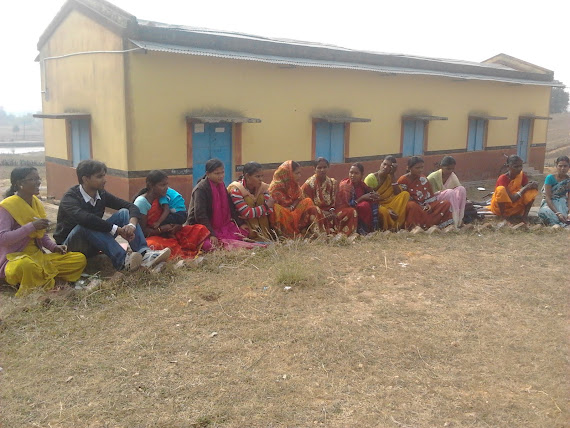
SHG Meeting