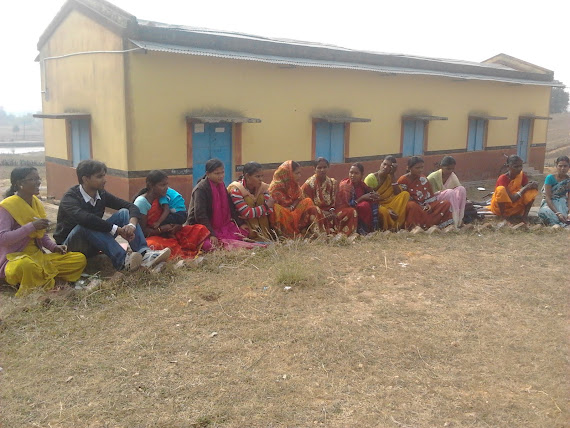
There is a profound irony in how our society fails to distinguish between patriarchal male chauvinism and religious belief. We have heated debates about banning the burkha for Muslim women, yet we remain conveniently silent about the Purdah system — equally restrictive, equally patriarchal, and very much alive in the hinterlands of our country among Hindu women. I fail to understand how the two are even considered different.
This duality was perfectly captured in a recent TV debate on burkha or no burkha. A mullah on the panel called women "Mohtaram" — the respected ones. And in the very next moment, he threatened to straighten up one of these very Mohtaram women with a staff, while the other two women sat silent. That silence says a lot. Not about their intellect — but about their instinct. It is what years of societal conditioning does — it quietly erodes that inner strength which should, and can, push back against such bullying and give a befitting reply.
The truth is, such mullahs and babas are products of the very society that then surrenders to their dictates. We have handed them the privilege of being religious dictators. And then we wonder why they act like one.
We are, by nature, an argumentative people. And yet, we rarely turn that argumentative nature toward the gender-based privileges baked into our own religions. Why do these distinctions exist at all? How can we call women the weaker section of society when our very existence is because of them? Can someone who gives birth to an entire civilization really be called weak?
The global gender ratio is roughly 1:1. And yet, not a single major religion in the world has a female messenger. Not one. Hinduism worships Kali and Durga with great devotion — fearsome, powerful goddesses. And yet, nobody celebrates the birth of Radha. Nobody celebrates the birth of Sita. The goddess is worshipped; the woman is overlooked.
If we go by Darwinism, the strongest survive. But I think what has actually survived is not strength — it is privilege. Those who held power wrote the rules, and the rules protected the powerful. Whether radical and fundamentalist mindsets are simply a continuation of that same instinct is worth asking.
And finally, one simple question — will any religion exist, if there is no human existence?
Lets fight and destroy, till a single human soul exists.